
China-US Route Rate Surge and Supply Chain Restructuring: Analyzing Structural Changes Behind China's Export Overbooking
Introduction
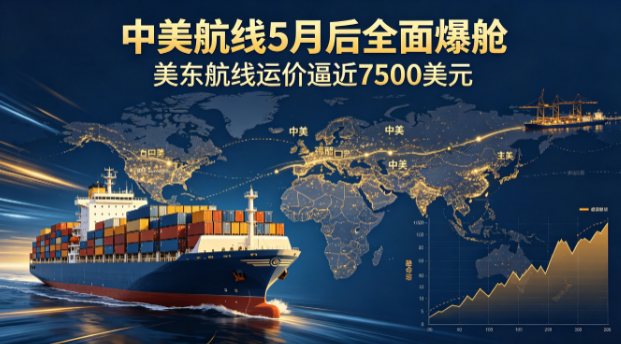
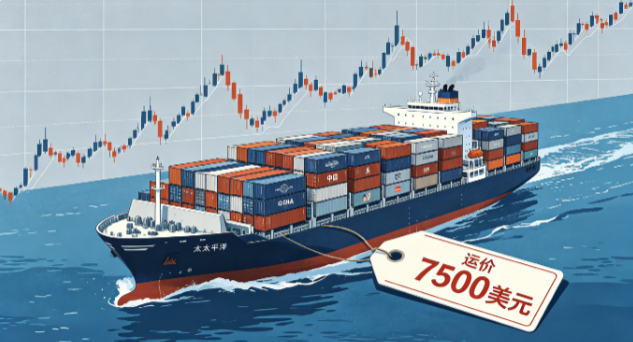
In May 2024, China's merchandise exports grew 19.4% year-on-year in USD terms, the fastest in three months. Behind these bright figures lies a reality both exciting and worrisome for foreign trade practitioners: China-US routes are fully booked, freight rates doubled in just one month, and freight forwarders at Ningbo Port struggle daily to "grab space and empty containers." From $2,900 on the US West Coast in late April to $6,300 in early June, and from $3,900 to $7,500 on the US East Coast, this is not just the return of a seasonal peak, but marks a deep structural restructuring of the global ocean shipping supply chain. This article analyzes the driving factors, transmission mechanisms, and long-term impacts of the rate anomaly from the perspectives of technical economics and supply chain management.
1. Demand-side 'Vengeful Rebound': Inventory Cycle and Restocking Wave
Export growth hitting a three-month high in May fundamentally stems from a phase shift in US retailers' inventory cycle. After a destocking phase from late 2022 to 2023, US end-consumption data (especially electronics, home goods, outdoor gear) has consistently improved. The inventory-to-sales ratio of large retailers like Walmart and Target has fallen to pre-pandemic levels, with restocking demand concentrated in Q2 2024. This batch of orders coincided with the post-May Day resumption pace of Chinese manufacturing, forming a cargo pulse.
Notably, this restocking wave features "urgent orders." Due to the Red Sea crisis forcing ships around the Cape of Good Hope, traditional shipping routes have lengthened transit times by 10-15 days. To meet Christmas pre-stocking (traditionally peaking July-August), importers had to place orders early and were willing to pay higher freight to secure space. This time pressure amplified the short-term elasticity of demand, making rates more sensitive to supply-demand imbalances.
2. Supply-side 'Perfect Storm': Red Sea Crisis, Capacity Mismatch, and Empty Container Bottleneck
On the surface, the China-US route booking explosion results from strong demand, but structural supply-side issues are the core driver behind the rate doubling.
2.1 Persistent Red Sea Disruption
Since Houthi attacks on merchant ships in November 2023, major shipping lines (Maersk, MSC, CMA CGM) have continuously diverted via the Cape of Good Hope. This has drastically reduced capacity utilization on Asia-Europe routes, increasing vessel turnaround time by about 25%. To maintain liner service frequency, shipping companies have had to pull capacity from trans-Pacific routes to supplement Asia-Europe, indirectly reducing available slots on the Pacific. This is a classic maritime network "butterfly effect."
2.2 Empty Container Imbalance
Another hidden cause of China's export surge is empty container positioning imbalance. Over the past year, China's export growth rate to the US has exceeded its import growth, leaving a large number of empties stranded at US ports. Although carriers try to reposition empties back to Asia, factors like tight US inland rail and truck capacity, increased port detention fees, etc., have slowed the return pace slower than expected. When export volumes surged in May, ports in East and South China faced periodic container shortages—hence the scramble for empties. Industry experience suggests empty container shortages typically amplify space tightness by 20%-30%.
2.3 Dynamic Pricing Strategies of Shipping Alliances
In an oligopolistic shipping market (top 10 carriers control ~85% capacity), companies use digital booking systems (e.g., Maersk Spot) to implement dynamic pricing. When capacity utilization exceeds 90%, the system automatically triggers a premium mechanism. Since May, spot rates from multiple carriers have risen 10%-15% weekly. This algorithmic pricing amplifies supply tightness signals and forms a self-fulfilling prophecy of "the more rates rise, the more people rush to book."
3. Transmission Effects of Rate Surge: From Forwarders to End Prices
The US West Coast rate jumped from $2,900 to $6,300, affecting companies under different trade terms differently.
- FOB Terms (seller bears freight to port of loading): Chinese exporters face an additional cost of about $3,400 per container. For SMEs with gross margins of only 15%-20%, this erodes net profit entirely. Some firms are forced to pass the increase onto FOB unit prices, but buyers often refuse, leading to a significant drop in order profitability.
- CIF Terms (seller covers freight and insurance): Exporters directly face rate volatility, unable to alter quotes in the short term, bearing full cost pressure. Such companies, if not locking in freight contracts (e.g., long-term contracts), may face losses on shipments.
A deeper impact lies in supply chain relocation. High rates are prompting some US importers to reassess the economics of "nearshoring" and "friendshoring." For example, if container freight from China to the US West Coast exceeds $5,000, the land transport cost from Mexico to the US (about $2,000-$2,500 per container) becomes more advantageous. This could accelerate the regional reorganization of North American supply chains.
4. Outlook: When Will Rates Fall? Structural Factors Will Dominate
In the short term, with the traditional peak season (July-September) arriving, China-US route rates still have upside potential, with the US West Coast possibly hitting $7,000. But the true inflection point depends on three variables:
- Red Sea Situation: If Houthi attacks cease and carriers resume Suez Canal routes, released Asia-Europe capacity would loosen Pacific slots, with rates expected to pull back 20%-30% within 2-3 months.
- Newbuilding Delivery Pace: 2024-2025 is a global newbuilding delivery peak, adding ~2 million TEU. If these vessels concentrate on trans-Pacific routes, oversupply would suppress rates. But carriers may adjust effective capacity via slow steaming or scrapping.
- US Tariff Uncertainty: If US tariffs on Chinese electric vehicles, steel, etc., take effect, pre-shipment effects for some categories could pull demand forward, leading to a Q4 export slowdown.
Conclusion
The May China-US route booking explosion is not a flash-in-the-pan seasonal peak, but a signal of structural adjustment amid multiple shocks. From the Red Sea crisis to empty container imbalances, from carrier algorithmic pricing to the US restocking cycle, every link amplifies rate volatility. For Chinese foreign trade companies, the future requires shifting from "passively accepting rates" to "actively managing supply chain risk"—including signing long-term contracts, optimizing inventory turnover, exploring multimodal solutions, and adjusting market deployment when necessary. When freight rates become a strategic resource, those who can more accurately predict and secure capacity will protect profit margins in fierce international competition. This is not only a technical upgrade in logistics but a test of business philosophy.