
Precious Metals Market Deep Dive: Price Volatility, Supply-Demand Dynamics, and Future Outlook
Introduction
Since ancient times, precious metals have been symbols of wealth and power, and indispensable safe-haven assets in the modern financial system. Gold, silver, platinum, and palladium not only hold significant positions in jewelry and industrial applications but also play core roles in global central bank reserves, portfolio allocation, and inflation hedging. However, in recent years, dramatic changes in international political and economic situations, monetary policy shifts, supply chain bottlenecks, and intertwined geopolitical risks have brought unprecedented volatility to the precious metals market. This article provides an in-depth analysis of the precious metals market from multiple perspectives including price trends, supply-demand fundamentals, influencing factors, and logistics costs, and explores possible future directions.
1. Precious Metal Price Trend Review and Driving Factors
1.1 Macroeconomic and Monetary Policy Impact
Precious metal prices show high correlation with Fed interest rate decisions, the dollar index, and real interest rates. Between 2020 and 2022, global loose monetary policy pushed gold to record highs; then the Fed's aggressive rate hikes and dollar strength pressured gold lower. However, from H2 2023 into 2024, rising rate cut expectations and frequent geopolitical conflicts drove safe-haven buying back into gold. Silver, due to its industrial attributes, shows greater price elasticity than gold, supported by demand from solar energy, 5G communications, and other emerging applications.
1.2 Geopolitical Risk and Safe-Haven Demand
The Russia-Ukraine war, Middle East tensions, and US-China tech competition have accelerated de-dollarization among central banks, leading to massive gold reserve increases. According to the World Gold Council, global central bank gold purchases exceeded 1,000 tonnes in 2023, maintaining a high level for two consecutive years. This trend not only directly boosts physical demand but also changes the pricing logic of gold—from a mere financial asset to a strategic reserve tool.
2. Supply-Demand Dynamics: Mine Supply, Recycling, and Emerging Demand
2.1 Gold Supply Analysis
Global gold production has shown signs of slowing growth in recent years. Major mining regions such as China, Australia, and Russia face declining ore grades, stricter environmental regulations, and rising labor costs, lengthening new mine development cycles. Additionally, strikes, natural disasters, and other unforeseen events affect short-term supply. On the recycling side, price sensitivity is high; when gold prices are elevated, recycling volumes increase significantly, but long-term stability is lower than mine supply.
2.2 The Particularity of Silver and Platinum Group Metals
About 60% of silver demand comes from industrial applications (photovoltaics, electronics, silver paste, etc.). With the acceleration of global energy transition, solar photovoltaic installations are growing rapidly, driving continuous demand for silver paste. Platinum and palladium are highly dependent on the automotive catalytic converter industry, but the rising share of electric vehicles is changing this structure. Palladium has seen dramatic volatility due to Russian supply risks, while platinum benefits from fuel cell development potential.
3. Logistics Costs and Supply Chain Resilience for Precious Metals
In the process from mine to end user, precious metals incur substantial transportation, insurance, and storage costs. Especially after the pandemic, global shipping bottlenecks caused freight rates to soar, challenging precious metals supply chains reliant on international trade. The following chart shows the latest trends in trans-Pacific container shipping freight rates, serving as an important reference indicator for measuring international logistics cost pressures.
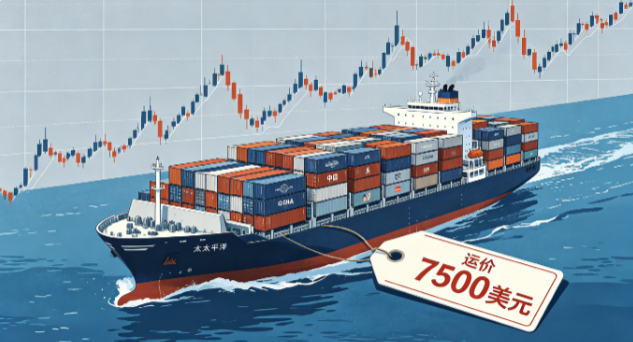
As shown, between 2023 and 2024, freight rates experienced violent swings, with peaks several times higher than pre-pandemic levels. For precious metals traders, high shipping costs not only erode profits but also extend delivery cycles, forcing some transactions to shift to regional supply or long-term contracts. Fortunately, after 2025, with new vessel deliveries and improved port efficiency, freight rates have eased, but geopolitical risks like the Red Sea crisis have pushed costs up again. Therefore, supply chain diversification, locking in freight contracts in advance, and building regional warehousing networks have become essential strategies for the precious metals industry.
4. Investment Strategies and Risk Management
4.1 Hedging and Asset Allocation
Precious metals play a "ballast" role in portfolios, with gold especially showing negative correlation with stocks and bonds during systemic risks. It is recommended that investors allocate 5% to 10% of assets to gold ETFs, physical bullion, or mining stocks. Silver is more volatile, suitable for risk-tolerant speculators.
4.2 Futures and Options Instruments
Gold and silver futures contracts offered by CME Group provide excellent liquidity for hedging or arbitrage. However, attention must be paid to leverage risk and the contango/backwardation changes in the forward curve. In recent years, simultaneous central bank intervention and speculative inflows have made short-term price prediction more difficult.
4.3 Emerging Digital Precious Metal Trading Platforms
Blockchain technology has given rise to digital assets like gold tokens (e.g., PAXG, XAUT), offering lower barrier entry and instant settlement. However, regulation remains unclear, requiring careful assessment of counterparty risk.
5. Future Outlook: Sustainable Development and Technological Innovation
5.1 Green Gold and Environmentally Friendly Mining
The ESG (Environmental, Social, Governance) wave is profoundly impacting the precious metals industry. Mining companies face pressure to phase out cyanide, reduce carbon emissions, and address tailings dam safety. Growing consumer demand for "ethical gold" is prompting the London Bullion Market Association (LBMA) to strengthen supply chain due diligence.
5.2 Electric Vehicles and Energy Transition Driving Demand
Silver demand in photovoltaics is expected to double by 2030; platinum also faces structural benefits due to increased demand for PEM electrolyzer technology. However, advances in recycling technology may partially offset mining supply pressure.
5.3 Digital Currencies: Competition and Complementarity with Precious Metals
Bitcoin has been called "digital gold," but its high volatility and speculative nature make it unlikely to replace physical gold's safe-haven status. The two may coexist in the future, possibly even with new stablecoins pegged to gold.
Conclusion
Overall, the precious metals market is in a new era of intertwined multiple drivers: central bank gold purchases providing a floor, structural transformation of industrial demand, volatile supply chain costs, and rapidly shifting financial market sentiment. Investors and industry participants must closely monitor monetary policy turning points, geopolitical crisis evolution, and the pace of technological innovation to seize opportunities and manage risks. Optimization of logistics and enhancement of supply chain resilience will become key foundations for sustainable development in the precious metals industry. Looking ahead five years, gold prices are likely to maintain high-level volatility; silver shows greater potential due to energy transition; platinum group metals require attention to substitution technology speed. Only through deep fundamental research combined with macro analysis can one stay invincible in this ancient yet ever-renewing market.
Keywords: precious metals, gold, silver, supply-demand dynamics, logistics cost, investment strategy, safe-haven asset, energy transition